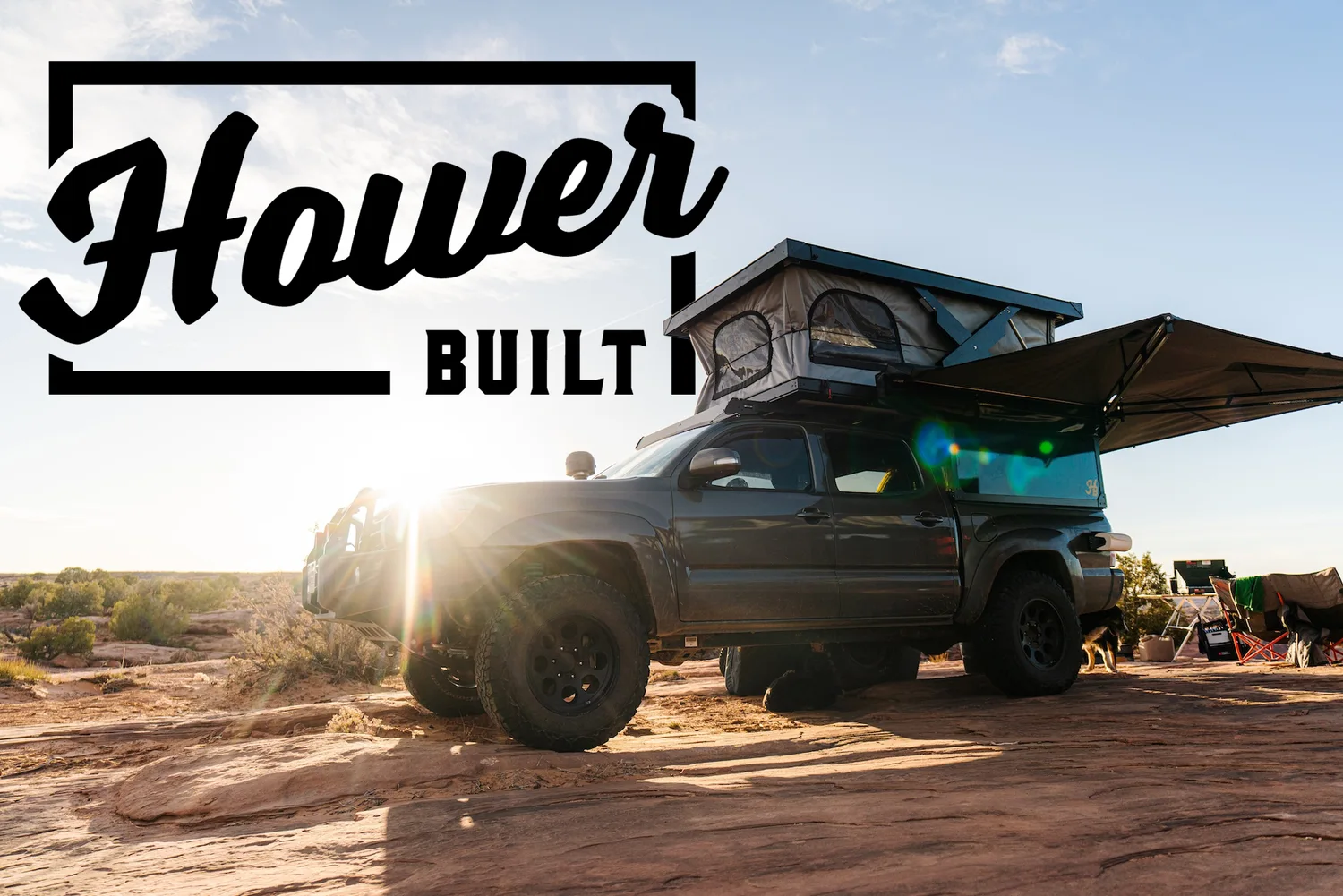
The story
HowerBuilt’s current camper range centers on a powered pop-top system intended to reduce the physical effort involved in raising and lowering a truck camper roof. The company describes the mechanism as fully electric and offers the camper in both slide-in and flatbed-mounted forms, placing the product between a conventional pickup camper and a more permanent expedition-style habitat.
The slide-in version is described as a fully enclosed, all-in-one unit that remains removable from the truck. That configuration is aimed at owners who want a complete living module without giving up the ability to use the pickup for ordinary hauling after removing the camper. The company does not publish a universal weight figure on the overview page, so payload compatibility remains dependent on the selected truck, floor plan, and equipment package.
The flatbed version mounts directly to a tray and uses a side entrance. HowerBuilt says the layout provides additional living area and features not available on its slide-in model. The format also reflects a broader market shift toward tray-mounted campers, in which the bed becomes a structural platform and storage can be integrated beneath or around the living module.
The electric roof is the most distinctive enabling feature. A powered system can make daily setup more accessible than manually operated lift mechanisms, particularly for users who frequently move between campsites or have limited lifting capacity. It also introduces additional system requirements, including electrical power, controls, weather protection, and a reliable manual or backup procedure if the mechanism becomes unavailable.
HowerBuilt’s public overview does not provide enough information to establish the roof’s lifting capacity, cycle rating, battery draw, emergency override, or suitability for use while the vehicle is parked on uneven ground. Those specifications will matter to buyers comparing the system with gas-assisted, hydraulic, or manually raised pop-tops.
The company also presents the campers as off-road-oriented products rather than conventional recreational vehicles. Its positioning emphasizes an integrated habitat that can be matched to either an existing pickup bed or a purpose-built flatbed truck. That flexibility may broaden the addressable market, but it also means installation and fitment decisions are more consequential than with a standardized bed-mounted camper.
HowerBuilt’s current public material establishes the product architecture, but not a complete technical specification or pricing structure. Prospective buyers will need confirmed dimensions, dry weight, electrical requirements, roof operating procedures, warranty terms, and truck-specific payload guidance before making a purchase decision.
Why it matters
Powered pop-tops could improve accessibility and setup speed, while the availability of both slide-in and flatbed versions gives HowerBuilt a differentiated position. The missing published data on weight, power consumption, and fail-safe operation is a meaningful limitation for buyers evaluating payload and expedition reliability.