The story
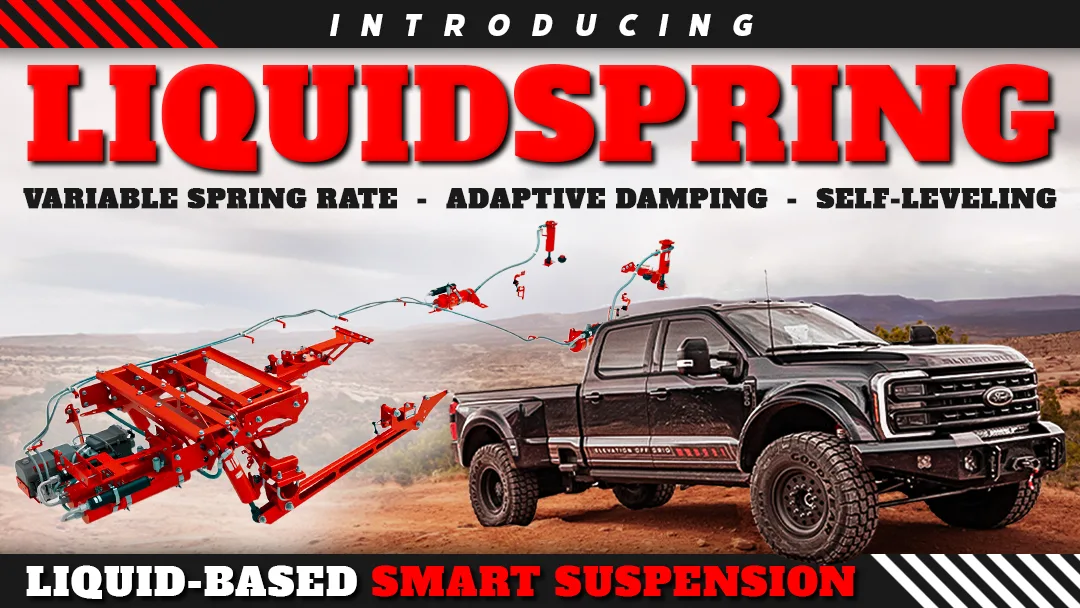
LiquidSpring is bringing electronically controlled hydraulic suspension technology into the truck-camper discussion with a system designed to adapt to changing loads and road conditions. Truck Camper Magazine describes the system as a hydraulic suspension arrangement that can adjust in approximately 40 milliseconds, with the objective of improving ride behavior on trucks used with or without a camper.
A truck camper changes a pickup’s operating condition in several ways. It adds static weight, alters the center of gravity, increases rear-axle loading, and can change how the suspension responds to bumps, cornering, braking, and crosswinds. Those effects become more pronounced as a camper is loaded with water, batteries, food, tools, passengers, and recreational equipment. Conventional spring and shock packages are selected for a compromise between empty-truck comfort and loaded-truck control; an adaptive system attempts to change that compromise electronically.
LiquidSpring’s approach uses hydraulic suspension components and electronic control rather than relying only on fixed-rate springs and conventional dampers. The stated 40-millisecond adjustment time is a manufacturer or product-description claim, not independent proof that every truck-camper combination will feel or handle better. Real-world performance will depend on the truck chassis, suspension calibration, wheel and tire package, axle load, camper center of gravity, road surface, and controller settings.
The technology could be most useful for fleets or owners whose trucks experience substantial load variation. A pickup that carries a camper for several months, runs empty during the work week, and occasionally tows a trailer presents a more difficult suspension problem than a truck that carries a consistent payload. An adaptive system could theoretically provide different support characteristics across those conditions, but it cannot increase the truck’s legal payload rating or correct an overloaded axle.
That limitation is important. Suspension upgrades do not replace payload analysis, proper tie-downs, tire-load verification, or manufacturer guidance. If a camper exceeds the truck’s gross vehicle weight rating, rear-axle rating, or tire capacity, improved ride control does not make the combination compliant or structurally safe. Nor does suspension technology eliminate the effects of a high center of gravity or excessive rear overhang.
Installation and service are additional considerations. Hydraulic and electronic systems are more complex than a traditional leaf-spring and shock arrangement. Owners will need to understand power requirements, control-module diagnostics, replacement parts, hydraulic maintenance, and the availability of technicians familiar with the system. Those issues may be manageable for commercial fleets but more consequential for remote travelers who depend on field-service simplicity.
The system’s potential value is therefore not simply a smoother ride. It could offer improved control across different payload states, more consistent suspension support, and a better match between the empty truck and camper-loaded truck. Whether those benefits justify cost and complexity will require testing on specific pickup chassis and camper configurations.
For the truck-camper market, adaptive suspension is an enabling technology rather than a camper feature. It reflects the category’s gradual shift toward heavier electrical systems, larger flatbed habitats, and trucks that serve multiple roles. The concept is promising, but buyers should treat the 40-millisecond figure as a specification to investigate, not as a guarantee of a particular handling result.
Why it matters
Adaptive suspension could address one of the recurring technical challenges in truck camping—making one pickup behave acceptably both empty and under a variable camper load—without changing the camper itself.