The story
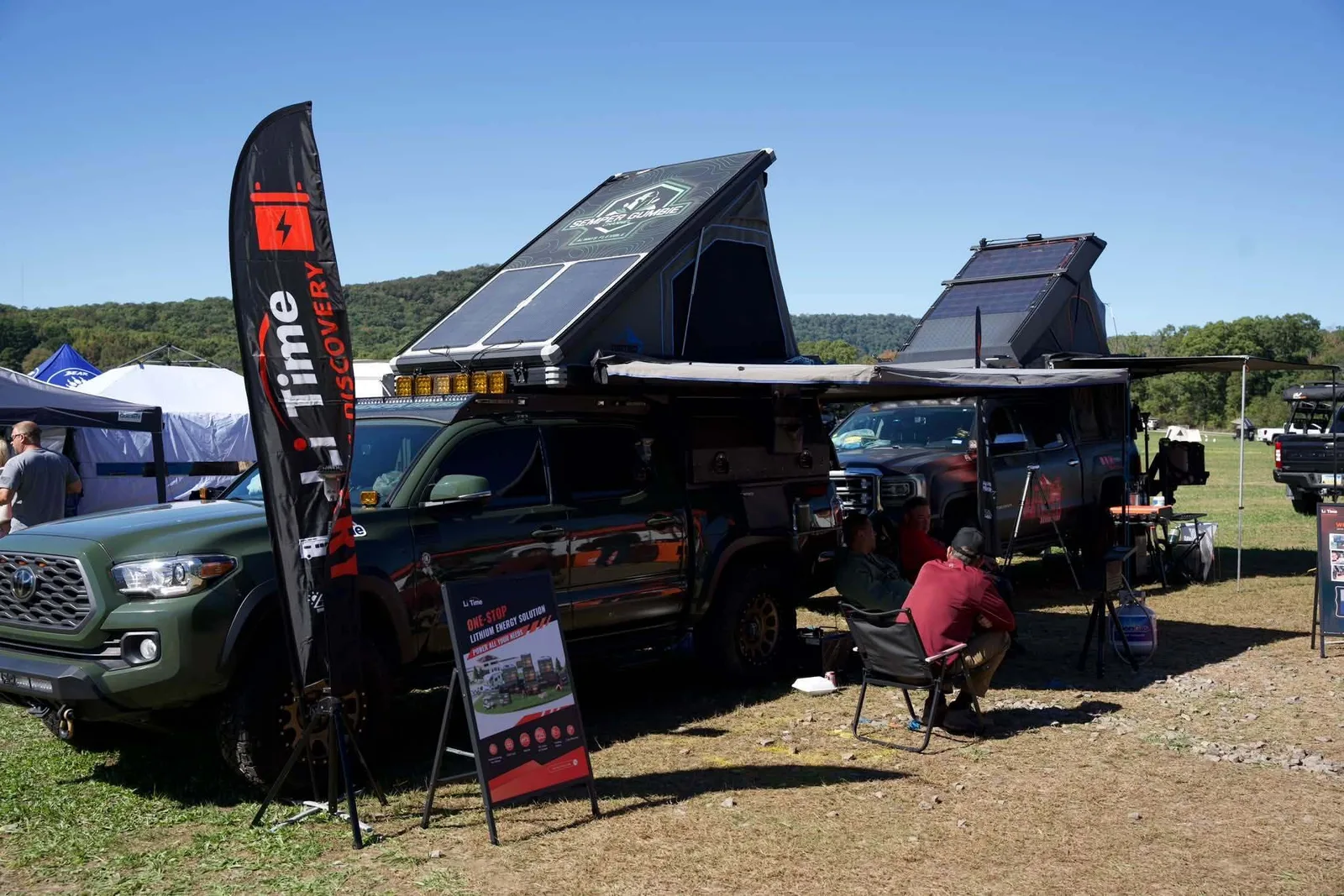
LiTime presented its latest mobile-energy products to truck-camper, van, and overland users during Rendezvous in the Ozarks from October 15–17 and Overland Expo East from October 23–25, according to the company’s October 30 announcement. The appearance was positioned less as a single product launch than as a demonstration of how battery packaging and monitoring are evolving around limited vehicle space and mixed charging requirements.
The products displayed included a 12V 100Ah Xtra-Mini battery, a 12V 100Ah Slim battery, and a 12V 320Ah ComFlex smart battery. Those capacities cover different installation priorities: smaller batteries for compact campers and constrained compartments, and larger-format storage for users who want several days of refrigeration, lighting, communications, or climate-system operation without enlarging the battery bank through multiple parallel units.
At Overland Expo East, LiTime showed a 12V 100Ah Group 24 Dual-Mode Self-Heating Bluetooth battery. The company says owners can monitor remaining capacity and operating status from a phone, reducing the need to access a battery compartment for routine checks. The battery also includes self-heating and low-temperature charging protection. Charging is interrupted when cell temperature is too low and resumes after the battery warms into an acceptable range.
That feature is particularly relevant to truck campers because winter use often exposes batteries to conditions that are uncomfortable for lithium cells even when the living area is heated. A self-heating function can make the battery more usable than a basic lithium unit, but it also consumes energy during warming and does not eliminate the need for a properly designed installation, insulation, fusing, and charge-control system.
LiTime also previewed a 12V 100Ah Group 24 Bluetooth Type-C battery scheduled for release in December. The company says the battery will provide two USB-C ports, with one port supporting up to 100 watts and both ports supporting up to 200 watts combined. Compatible USB-C power-delivery sources can recharge the battery, while the battery can directly power laptops, phones, and other electronics.
The Type-C design could simplify small electronic loads in pop-up campers and truck-bed habitats by reducing the number of separate adapters and inverter-powered outlets. It is not, however, a substitute for a complete camper electrical system. High-draw appliances such as induction cooktops, air conditioners, and larger inverters still require appropriately sized conductors, protection devices, and battery capacity.
The broader implication is that truck-camper electrical systems are moving toward more modular battery formats and more visible system data. For buyers, the practical comparison is no longer just amp-hours. Physical dimensions, charging temperature limits, heating energy consumption, Bluetooth reliability, integration with solar and alternator charging, and serviceability may matter just as much as nominal capacity.
Why it matters
Compact batteries with temperature protection, phone monitoring, and USB-C charging address common truck-camper constraints: limited installation space, cold-weather use, and growing electronic loads.