The story
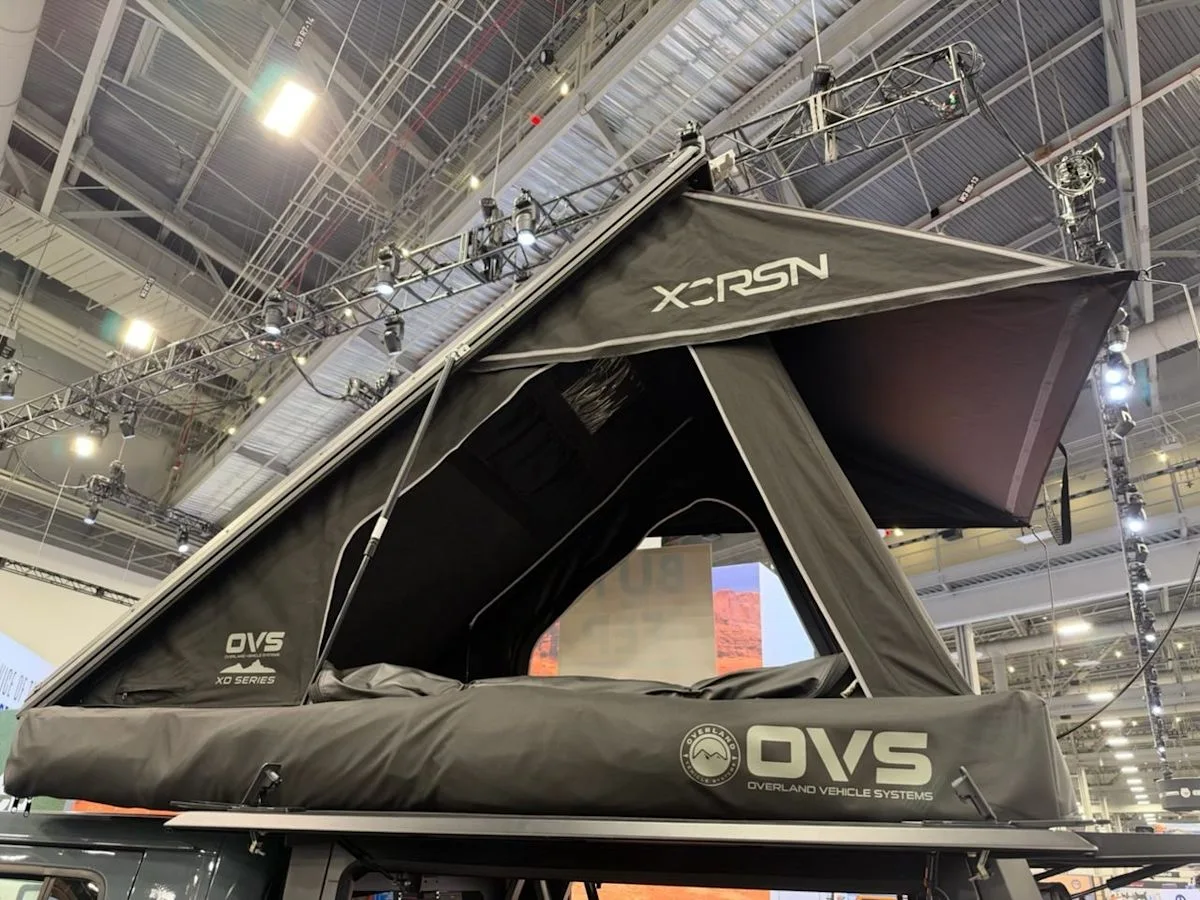
Overland Vehicle Systems returned to the 2026 SEMA Show with the XCRSN, a modular camper concept aimed at pickup owners who want sleeping space without permanently converting the truck. The system was presented as a staged purchase: owners can begin with the company’s Expedition truck cap and later add the rooftop-tent component when their use case justifies it.
The core cap is described as a marine-grade stainless-steel truck cap with a solid roof panel. In the initial configuration, it functions as a conventional enclosed bed cap rather than a full camper. That distinction matters for owners who use the truck for work, hauling, or daily transportation and do not want a permanent camper installation.
Adding the rooftop tent requires removing the solid roof panel and installing the XCRSN spacer. The spacer creates a pass-through connection between the truck bed and the elevated tent, turning the cap-and-tent combination into a two-level sleeping arrangement. The published description does not establish the system’s complete installed weight, payload requirements, pricing, vehicle fitment range, weather rating, or production timetable.
The rooftop tent uses aircraft-grade aluminum in its structure and 320-gram ripstop polycotton fabric with a blackout coating. OVS says the blackout material is intended to keep the sleeping area dark during daylight hours. The design therefore sits between a traditional wedge-style topper camper and a rooftop-tent setup: the truck bed remains useful as an enclosed lower level, while the tent supplies the elevated sleeping area.
The modular approach also creates tradeoffs. The removable roof panel and spacer add hardware, installation steps, and another interface that must be sealed and secured correctly. A rooftop sleeping level can improve usable floor area, but it also requires ladder access and may be less convenient for users who need a single-level interior. OVS’s public presentation did not specify whether the lower level includes a finished floor, storage modules, seating, ventilation, electrical provisions, or cooking equipment.
The XCRSN is significant because it treats the truck cap as a platform rather than a finished product. Buyers can preserve a conventional cap configuration for ordinary use and add camping capability later. That may broaden the addressable market beyond dedicated truck-camper buyers, although the system’s practical value will depend on installation time, total cost, load limits, and compatibility with bed accessories.
At SEMA, OVS also displayed a six-ton off-road jack, but the available reporting does not establish that the jack is integrated into the XCRSN camper system. The camper details currently amount to a product presentation rather than a fully documented production launch. Further manufacturer information is needed before comparing it directly with slide-in campers, wedge campers, or other modular cap systems.
Why it matters
The XCRSN illustrates a growing middle ground between a truck topper and a conventional camper: staged, removable, and expandable. Its real market impact will depend on verified weight, fitment, pricing, and production details that OVS has not publicly supplied in the available announcement.